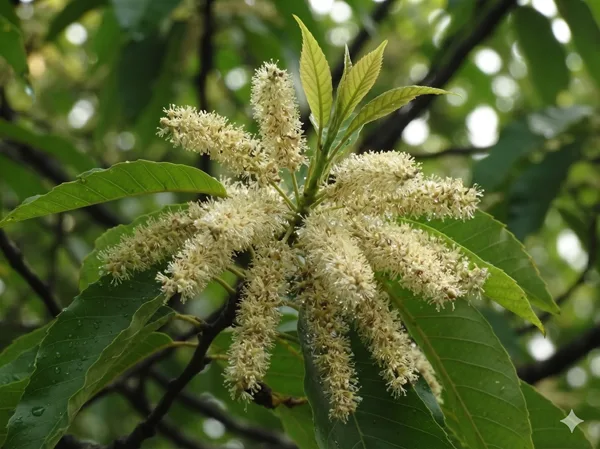
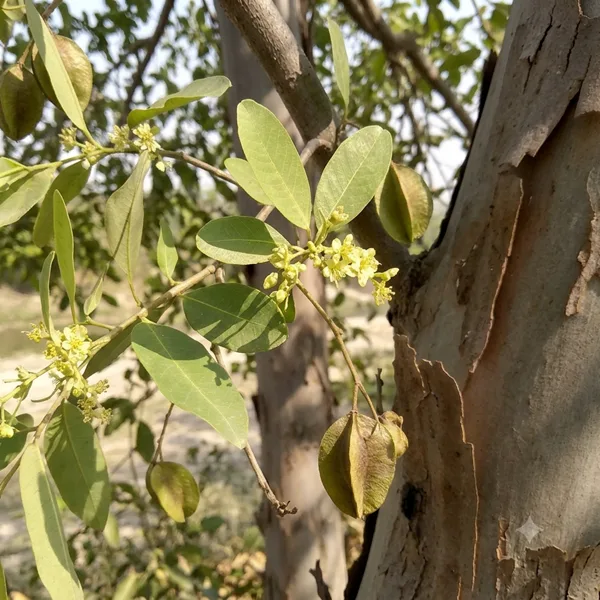
Hirda
हिरडा
Terminalia chebula Retz.
Medium to large deciduous tree up to about 30 m, with a trunk up to about 1 m across.
A. Basic information
- Common name
- Hirda
- Scientific name
- Terminalia chebula Retz.
- Marathi name
- हिरडा
- Plant family
- Combretaceae
- Plant category
- Trees
- Other regional names (verified only)
- Haritaki
- Botanical classification
- Not documented
- Species identification number (for example a herbarium or database ID)
- Not documented
B. Botanical description
- Typical height and growth pattern
- Medium to large deciduous tree up to about 30 m, with a trunk up to about 1 m across.
- Leaf shape, size and characteristics
- Not documented
- Flower colour
- Not documented
- Flowering season
- Not documented
- Fruit description
- Not documented
- Fruiting season
- Not documented
- Bark characteristics
- Not documented
- Seed description and dispersal method
- Not documented
- Expected lifespan
- Not documented
C. Habitat and distribution
- Sunlight requirement
- Not documented
- Water requirement
- Not documented
- Native distribution
- Native to South Asia, from India, Pakistan and Nepal east to Yunnan and south to Sri Lanka and Malaysia.
- Occurrence in Maharashtra
- Not documented
- Suitability for Pune's climate
- Not documented
- Natural habitat
- Not documented
- Soil type and drainage requirements
- Not documented
- Altitude range
- Not documented
- Drought tolerance
- Not documented
- Other ecological growing conditions
- Not documented
D. Ecological importance
- Birds, bees, butterflies and other pollinators supported
- Not documented
- Food and shelter for wildlife
- Not documented
- Soil stabilisation and erosion control
- Not documented
- Biodiversity and ecological restoration
- Not documented
- Carbon storage and climate resilience
- Not documented
- Local ecological balance
- Not documented
Specific wildlife relationships are listed only when supported by a reliable source.
E. Plantation and care guide
Species-specific guidance is listed first. General gardening advice is shown separately at the end and is not specific to this species.
- Recommended planting season
- Not documented
- Seed collection and propagation
- Not documented
- Nursery preparation
- Not documented
- Planting instructions
- Not documented
- Recommended spacing
- Not documented
- Watering during establishment
- Not documented
- Long-term water requirements
- Not documented
- Soil preparation
- Not documented
- Maintenance and pruning
- Not documented
- Common pests and diseases
- Not documented
- Expected growth rate
- Not documented
- Approximate time to establishment
- Not documented
- General gardening advice (not specific to this species)
- Not documented
F. Traditional and medicinal uses
Not medical advice. Traditional uses are cultural claims and are not proof that a plant is safe or effective. Do not use any plant to treat an illness without advice from a qualified doctor. Properties studied in scientific literature are listed separately.
- Traditional uses (claims, not proven effects)
- Not documented
- Medicinal properties studied in scientific literature
- Not documented
- Cultural and historical significance
- Not documented
- Other practical uses
- Not documented
G. Biodiversity and wildlife associations
- Birds that use the species
- Not documented
- Butterflies and pollinators
- Not documented
- Mammals and other wildlife
- Not documented
- Host-plant relationships
- Not documented
- Relationships with other native species
- Not documented
H. Conservation information
- IUCN Red List status
- Under verification (not confirmed from an assessment)
- Applicable Indian conservation protections
- Not documented
- Major threats
- Not documented
- Habitat loss and fragmentation risks
- Not documented
- Conservation recommendations
- Not documented
- Role in local ecosystem restoration
- Not documented
“Under verification” and “Not documented” mean the information has not been checked yet. They do not mean the species is safe or threatened.
I. Image gallery
Photographs (whole plant, leaf, flower, fruit or seed, bark and habitat) will be added once authentic, correctly identified images are available.
J. References and further reading
Starter record. Accepted name, family and native range were checked against Plants of the World Online (Kew) and, where assessed, the IUCN Red List; descriptions come from pages that cite them. Marathi names come from the organisation's shortlist and are being verified. Occurrence in Pune and on Baner-Pashan Hill is under verification, and no details have yet been reviewed by a botanist.
- Plants of the World Online (Kew): search for Terminalia chebula (opens in a new tab) · Check accepted name and native range
- Plants of the World Online (Kew): Terminalia chebula (opens in a new tab)
Related species
- TreesIUCN: under verification
Ain
ऐन
Terminalia elliptica Willd.
- Family:
- Combretaceae
- Native region:
- Indian subcontinent
Tree growing to about 30 m; a prominent part of dry and moist deciduous forests of southern India up to about 1,000 m.
Ecological benefit: Under verification
- TreesIUCN: under verification
Arjun
अर्जुन
Terminalia arjuna (Roxb.) Wight & Arn.
- Family:
- Combretaceae
- Native region:
- Indian subcontinent
Tree about 20–25 m tall with a buttressed trunk and a wide crown.
Ecological benefit: Under verification
- TreesIUCN: Least Concern
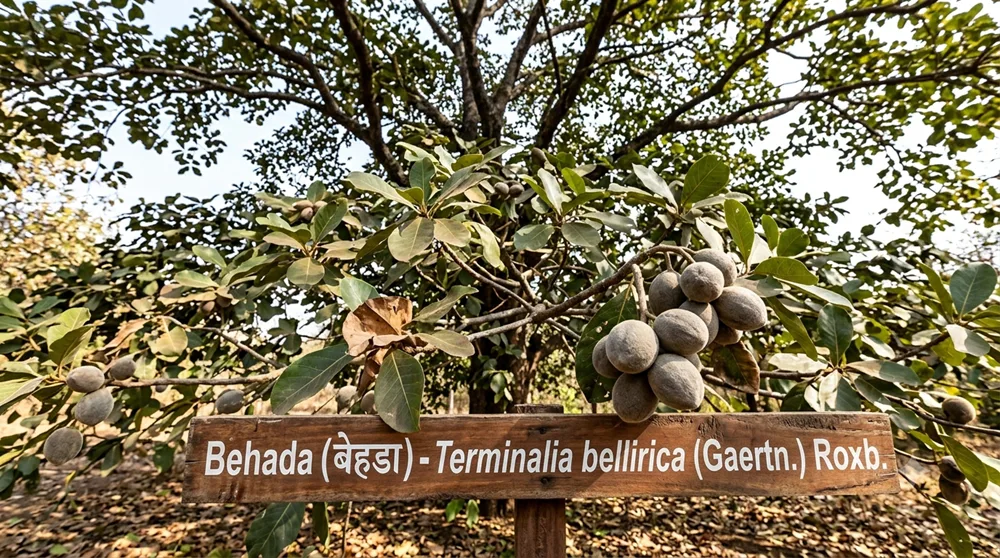
Behada
बेहडा
Terminalia bellirica (Gaertn.) Roxb.
- Family:
- Combretaceae
- Native region:
- Indian subcontinent
Large deciduous tree.
Ecological benefit: Under verification